Suction-based therapy that lifts fascia, increases circulation, and releases deep muscular tension. One of the most relaxing and effective ways to address stubborn tightness.
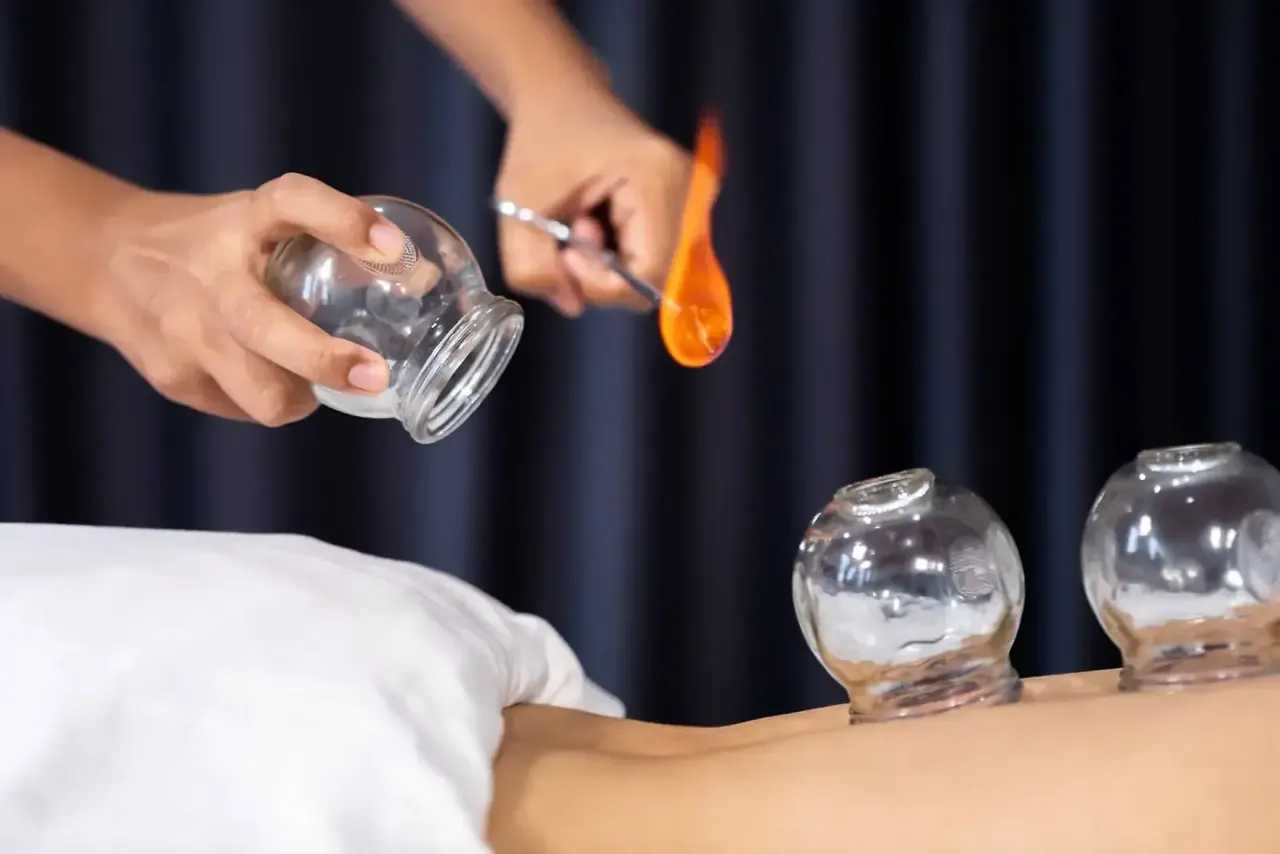
Cupping uses glass or silicone cups that create gentle suction on the skin. The negative pressure lifts the underlying fascia and tissue, increases blood flow, and allows tense muscles to release. It is sometimes described as a reverse massage.
Most patients describe cupping as a deep stretching or pulling sensation rather than pain. Pressure can be adjusted to your comfort, and the experience is often described as relaxing rather than intense.
Cupping is especially effective for tension that does not respond well to massage alone:
Cupping sessions are typically 30 to 60 minutes and often paired with acupuncture. Marks are common in stagnant areas and fade over a few days to a week.
We identify areas of tension and check for contraindications. We use medical-grade glass and silicone cups, never reused between patients.
Cups are placed on the target areas with adjusted suction. The cups may be left stationary or slid across oiled skin for a gliding effect.
Cups stay on for 10 to 20 minutes typically, depending on goal and sensitivity. We may also add acupuncture during the same session.
Round marks are common in areas of stagnation. They fade in a few days to a week. Darker marks tend to indicate greater stagnation. They become lighter with regular treatment.
Book cupping as its own session or add it to an acupuncture appointment. Many patients combine both for stubborn tension.
We use medical-grade glass and silicone cups, cleaned and sterilized between patients per California acupuncture board standards.
Different goals call for different applications. We adjust based on whether the issue is muscular tension, respiratory, or fluid stagnation.
Cupping uses glass or silicone cups that create gentle suction on the skin. The negative pressure lifts the underlying fascia and tissue, increases blood flow, and allows tense muscles to release. It is sometimes described as a reverse massage.
Cupping is especially effective for back, neck, and shoulder tension, tight hips, sports recovery, post-workout soreness, headaches, and respiratory congestion. It is often used alongside acupuncture during the same session.
The circular discoloration is not bruising in the traditional sense. It is the result of stagnant blood and fluid being drawn to the surface. The marks typically fade within a few days to a week. Darker marks indicate areas of greater stagnation. As your circulation improves with regular treatment, marks usually become lighter.
Most people describe cupping as a deep stretching or pulling sensation rather than pain. Pressure can be adjusted to your comfort, and the experience is often described as relaxing.
For acute tension, weekly sessions for a few weeks may be helpful. For maintenance, many patients return every two to four weeks or pair it with their regular acupuncture sessions.
More questions? See our full FAQ or contact us.
Keep Reading
Explore all our wellness guides, or view memberships & packages and fees.
977 Valencia Street, in the heart of San Francisco’s Mission. Easy walking distance from 24th Street BART, Dolores Park, and the Castro.
Schedule your appointment online or book a discovery call if you'd like to learn more.
Schedule Online